

Women's Work
Anger is for men, crazy is for women

I am anxious about posting this poem. Somewhere in the back of my mind I am having this worry: what if every man that’s ever wronged me sees this post and thinks I’m crazy?
I’ve pondered this exact thought as much as a clinically anxious person can. I’ve texted friends. I’ve stared at the wall. I’ve googled if you can block people from your Substack if you don’t know their account, or if they even have one in the first place.
Then I thought to myself, I’m not the one who did *insert whatever fucked up thing here.* And isn’t this poem about how women are expected to be composed at all times less they be dubbed emotional and crazy?
Fuck it.
Women’s Work
I was borne a woman on the high road,
no say in the matter, just expectation of composure.
Boys got to hit trees with sticks,
were handed guns,
and had righteous anger
pinned to the front of their scout uniforms.

They gave me a crayon to draw with,
bred us gentle and kind,
so that when target practice came,
my shot was shaky,
and I thought that boyhood must be a gift,
the mess of personhood
and the grace it was given.

They nearly voted me Mary,
and a virgin I was,
but I chose the soldier who pushes Jesus.
I chose villainhood and the brown cloth
belted round my waist, relishing in the push,
praying for the perfect execution of it
as blond Jesus passes.
We chose him because he was quiet, composed,
but I remember the waves breaking.

Simon was only measured when I wasn’t around.
He wouldn’t take my virginity,
but he thought about it, I know he did,
I wormed my way into his brain and heard it,
gave him long walks and a comb
to untangle my knots with.
Until he’d twist back into the truest sense of himself,
go somewhere I could follow,
and the yelling would start.
The two of us, a foot apart and burning,
he pinned righteous anger to my heart,
Crazy Girl Badge, no take backs.

It’s easy to be a good man when I’m around.
All your flaws stick to me.
And I put them to good use,
for emotional labor is Women’s Work
but face and apron should stay clean,
while you teeter on the curb of the high road.
I’m wearing my Crazy Girl Badge with pride, or at least I’m trying to.
I’ve spent most of my life trying very hard to be good, to be the kind of girl who does women’s work with debutante level poise. Act like a Southern belle. Stand there and endure. When people put me down, I kept my mouth firmly shut—I still do. Instead, I let anger boil in me like the mantle of the earth churning beneath a thin crust.
I’m not sure how often the average person is supposed to be angry, but I’d be willing to bet that I stew in my anger more than most. And if this is average, frankly, that’s a tad frightening.
A few times a week, a past injustice or a recent slight will take ahold of my brain like an emotional parasite. I sit on the tram and live in that emotion. Chew on it, digest it, spit it up again, and have another go at it. I am a witch boiling myself alive in a cauldron of my own making.
And then I get to where I’m going, and society expects me to always keep a cool head. Anger is for men, crazy is for women.
I have been the victim of the Crazy Girl Badge more times than I can count. Men and women alike have stuck me with it. Shit, they might as well tattoo it to my forehead.
The first time I can remember a boy using his composure against me, I was fifteen years old at a high school football game.
My ex-boyfriend no longer attended the same school as me, but he showed up to the game just to watch me have a panic attack. A girl I knew told me to be nice to him, because he felt bad for all that he’d done…allegedly. I was standing against a chain link fence when she said that. I could feel the wire pressing into my kneecaps. I don’t remember if I yelled at her for the comment, or if I just raised my voice. He showed up at my school, and I was being told to keep it together. Because it is always the responsibility of women and girls to mediate conflict. Even when they’re fifteen years old and experiencing PTSD symptoms from their first relationship.
Meanwhile, a good friend of mine had found herself trapped in a conversation with my ex, and being herself, she decided to probe a bit. Just to see what he’d say. And maybe, just maybe, she recorded the conversation (one-party state, don’t worry). The recording captured my ex speaking in the level tone he usually used and using that tone to call me crazy. He’d gathered a small group of other students I didn’t know very well, so that they might hear his overtly false speech and perhaps spread information to ruin the reputation of a fifteen-year-old girl.
The jist of it was this: Bianca cries sometimes and she is clearly crazy.
Ironically, I was very quiet at that point in my life. I spoke to my handful of friends, my family, and maybe in class if I knew the answer. I doubt casual acquaintances could have envisioned me as emotional as my ex claimed I’d been. But that was the one thing he didn’t lie about. I was openly emotional in this situation because I couldn’t help it. I am a crier, always have been. Any strong emotion—whether it be anger, sadness, fear, happiness, relief—pours out of me in the form of tears. I’m the kind of person who must throw a twenty-minute temper tantrum alone in my room in order to process anything. This is who I am.
The kind of character attacks I suffered at fifteen kept cropping up all the way through high school and college. When men do bad things to me, I watch their narrative bend over backwards to create the character of Bianca, the Crazy Demon Slut.
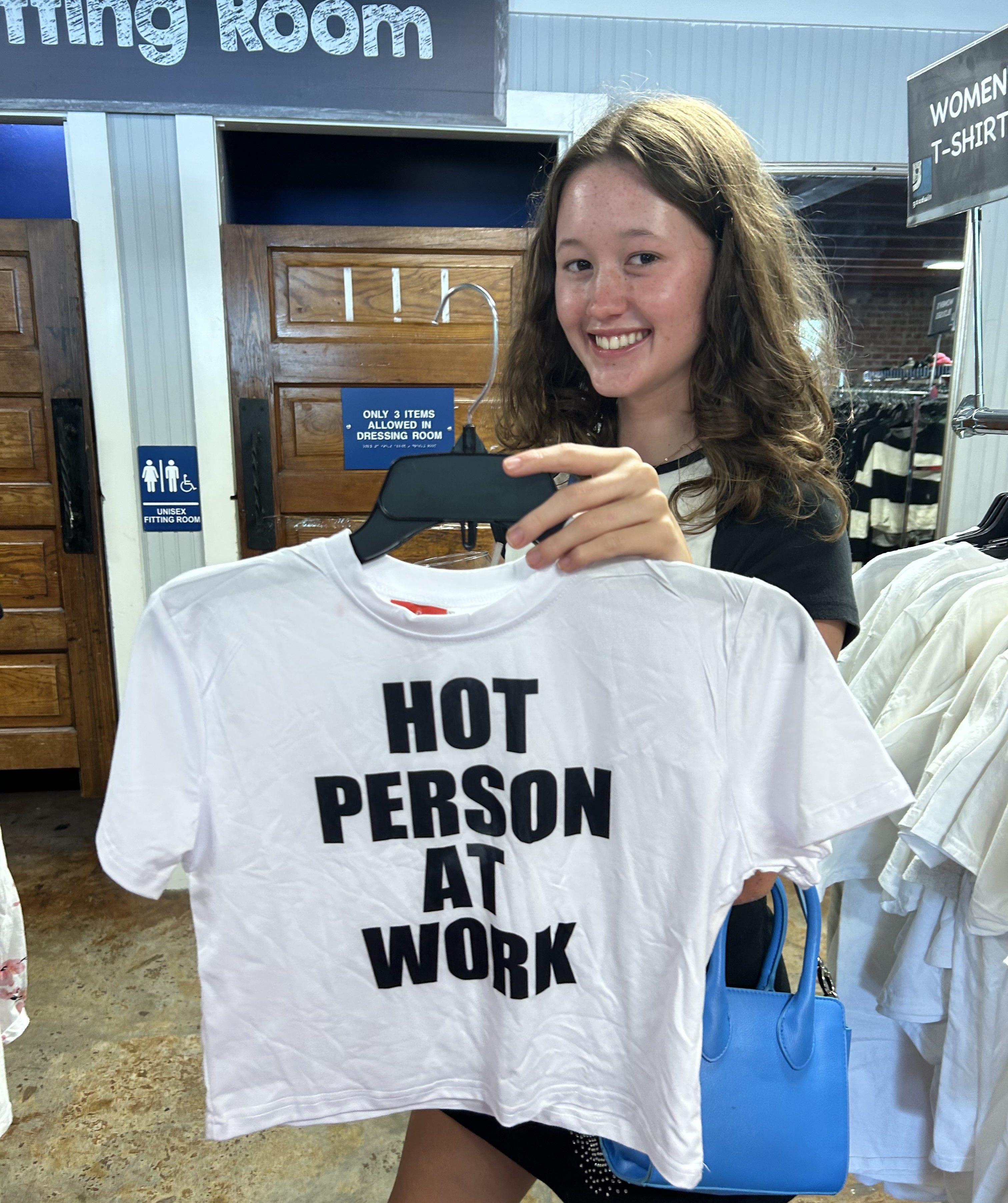
It doesn’t matter if I rejected him, or flirted with him, or ignored him for several years. In simply reacting to their actions, they have enough to call me crazy. I can force myself to be nice, I can cower in fear, I can do anything to make myself small. Yet, other women rife with internalized misogyny can still accuse me of going after their boyfriends, whether I ever wanted him or not. They’ll stare me down at bars and call me crazy, refusing to acknowledge any of the wrongdoing by the man standing next to them. They’ll corner me at a coffee shop and tell me I’m being “inappropriate,” for having male friends. Frankly, writing me into a Crazy Demon Slut is easier than holding the man in their life accountable. I, a woman with an irreverent, emotional personality, am low-hanging fruit.
I don’t say this to hate on other women. I say this because women are often guilty of perpetuating misogyny alongside men. I would be remiss to act as if men are the only people upholding reductive, limiting ideas about women in our society.
I know what people have said about me. Bianca cries sometimes and she is clearly crazy.
I’m now envisioning people in my life rolling their eyes at the idea that this is the best I can do at being nice. I make far too many snarky comments for anyone to consider me a truly nice girl.
Yet, I would consider myself kind. I think about other people’s feelings constantly—a bit of that might be a symptom of my anxiety. But I’m not a nice girl. To me, niceness is about politeness, agreeability, and bending to the will of others. Niceness is, well, nice on the surface, but it’s kindness that really cares about other people beyond the tip of the iceberg.
I wasn’t a nice child, but I was kind.
Perhaps because of social ostracization, or the many fantasy books I read, I was full tomboy by the time I was eight. Fitting in was difficult for me, no matter how much I twisted myself up in knots trying to make myself more palatable. Every day, I felt like a tiny pariah, an easy target for the meanness children excel at.
I wasn’t a tomboy because I didn’t like girly things—I very much did. I was a tomboy because I couldn’t be nice in the same way other girls were so, I took a hard turn in the other direction. I relished in the freedom of being boyish and “not like the other girls.” Most of my female peers never accepted me so, I simply rejected girlhood. The expectations of neatness and composure were too high, even in third grade, and in my child brain, this was the only way to go.
That brings us to The Soldier Who Pushes Jesus, my chosen part in the Stations of the Cross play the third graders put on at my Catholic school.

My father took this photo of me in approximately 2012, and he texted it to me in 2023, saying something about there being a religious allegory somewhere in that photo. It’s one of my favorite photos of myself, partially because the image of a little girl in a brown sack sitting next to the cross with a look of slight distain on her face is exactly the kind of thing ex-Catholics eat up. But ultimately, I love that the photo feels like me. I don’t look nice. I look much how I felt on the inside.
“Women’s Work” is the typical feminist critique of society that one can come to expect from my writing. I attempted to capture the paradox of the female existence: women must do all the emotional labor, but we can’t be emotional while doing it.
Just by being born a girl, you are held to a higher standard (born on the high road)—a reality that I hope most people are already aware of. Of course, there is nuance here, the kind of nuance my blog doesn’t have the time or readership to handle. I am torn about typing out some long disclaimer about the male experience. I’m more than aware of how taboo around male emotions fucks up everyone, to put it bluntly. But I wonder why I need to bother acknowledging that if it isn’t the topic of this pseudo-essay. Obviously, I’m talking about my experience as a woman. Must I always throw in a point about how things are hard for men, too? Can’t women just talk about being women without bending over backwards to not offend men?
Perhaps it really boils down to this: generally, showing emotion is demonized in American society. I can only really speak to my experience in the Southeast as a white Latina, but I feel comfortable making that statement, especially as it pertains to the perception of emotional women.
There is some exceptional irony in my anxiety about posting this, as I’ve just written a poem about how demonized for emotion, yet I’m sitting here thinking “what if everyone thinks I’m overemotional and crazy?”
That would just prove my point, wouldn’t it?